2026-10-13 ·
Why Is Your Refrigerator Leaking Water? Causes and Solutions
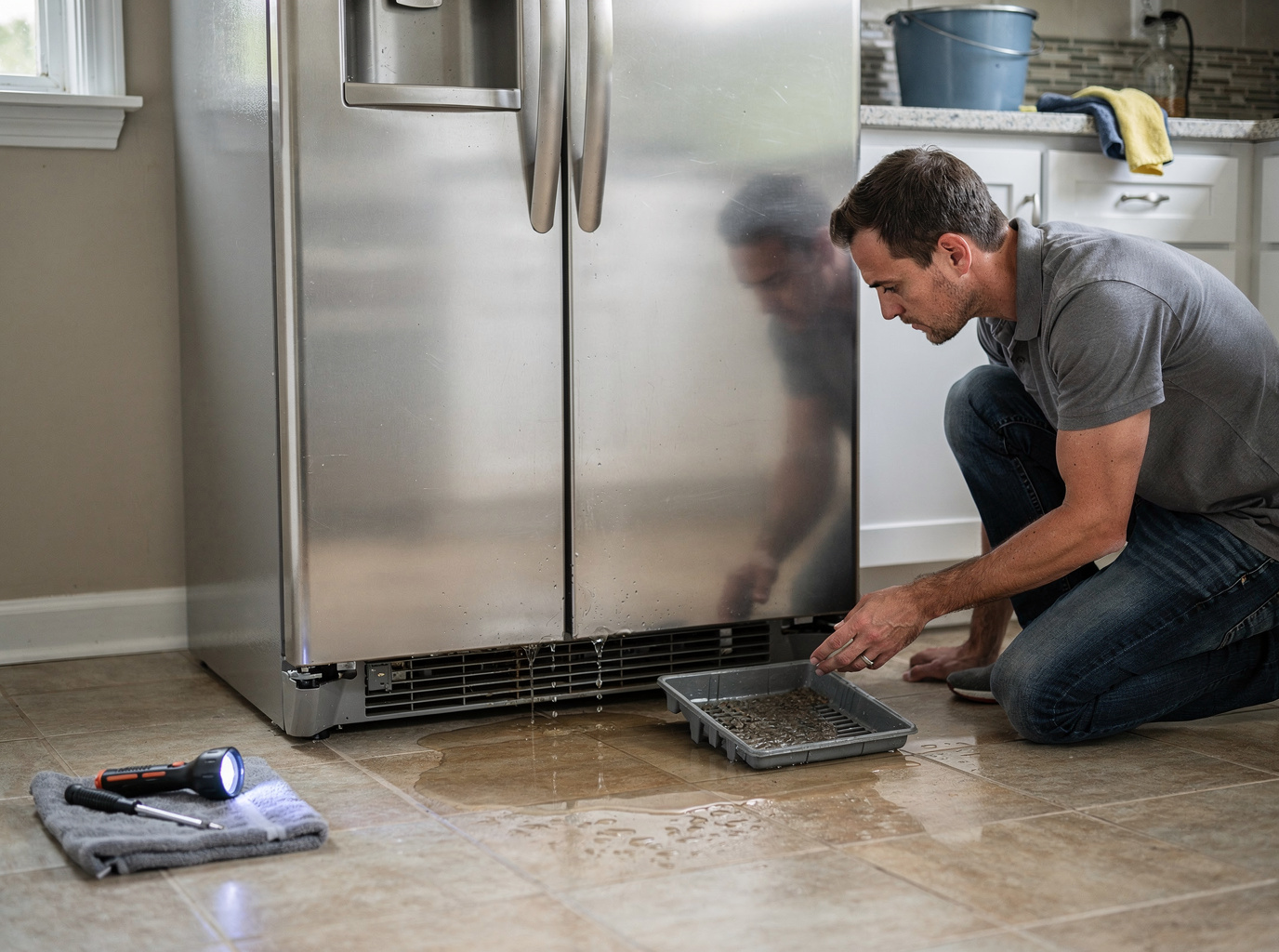
Most refrigerator leaks come from one of three places: a clogged defrost drain, a cracked or loose water supply line feeding the ice maker, or a worn water filter housing. A clogged drain is the most common cause and often the cheapest fix, usually a $0–$30 do-it-yourself job if you have the right tools. A failed water line or valve typically runs $150–$400 with a technician, depending on the model and how hard the part is to reach. Finding the source is the hard part, so start by checking where the water is actually pooling before you touch anything.
Start With the Defrost Drain
The defrost drain is the single most likely culprit when water collects at the bottom of the fresh food compartment or spills onto the kitchen floor. Frost forms on the evaporator coil during the freezer's cycle, then melts and runs through a small drain tube into a pan underneath the unit, where it normally evaporates with the help of the compressor's heat. When that tube clogs with food particles, dust, or ice, meltwater backs up and overflows. Look behind the crisper drawers or at the back wall of the fridge for the drain opening, and check whether water is pooling there. A thin wire, a turkey baster filled with warm water, or a commercial drain-clearing tool usually clears it in a few minutes. Repeat the flush every few months to prevent a recurrence.
Check the Water Supply Line and Ice Maker
If you notice water under the refrigerator rather than inside it, or if the floor is wet only when the ice maker runs, the supply line is the next suspect. The thin plastic or braided tubing that connects the ice maker to your home's cold water line can crack, split at the compression fittings, or work loose as the refrigerator is pushed in and out for cleaning. Pull the unit out carefully, dry the area, and look for drips at both ends of the tube and around the inlet valve. Tightening a fitting may solve it, but a cracked line should be replaced rather than taped. Because these tubes run behind appliances in tight spaces, many homeowners in older Hewlett houses find the connection is hard to reach without moving cabinets, which is a good reason to bring in a technician.
Water Filter and Dispenser Leaks
Refrigerators with built-in water filters have an extra leak point that many owners overlook. The filter housing uses rubber O-rings that compress when the cartridge is installed, and if a cartridge was pushed in crooked or the seal was damaged, water can seep out at the base of the housing during dispensing. Improperly seated filters can also leak around the dispenser when pressure builds in the line. Switching to a cartridge from the manufacturer, lubricating the O-ring lightly with food-safe grease, and reseating it until it clicks fully often corrects the problem. If the leak continues, the housing itself may be cracked, and replacement housings generally cost $40–$120 for most major brands.
Door Gaskets and Level Problems
Not every leak is a plumbing issue. A worn or dirty door gasket lets warm, humid air into the cabinet, which condenses into moisture on the inside walls and drips down to the floor, often looking like a leak from inside the fridge. Wipe the gasket with warm soapy water and check for cracks, flat spots, or places where the seal no longer pinches against the cabinet. You can test it by closing the door on a dollar bill; if it slides out easily, the seal needs adjusting or replacing. An unlevel refrigerator also causes problems because the door doesn't close flush, and meltwater can run toward the front instead of the drain. Adjusting the front leveling feet is a quick fix that many owners can handle themselves.
How Hewlett's Weather Makes Leaks Worse
Hewlett's humid subtropical climate matters more than most people expect. Summers bring hot, muggy air that makes the compressor run longer, which increases condensation and puts extra load on the defrost drain. Moisture in the kitchen also accumulates faster near the refrigerator, especially in homes where the appliance sits against an exterior wall. Winters are a different challenge: when temperatures drop during a cold snap, a fridge in an unheated garage or a kitchen addition can struggle to maintain proper cycling, and the drain line may freeze. Nor'easters can knock out power for hours, and when power returns, the sudden surge can damage the control board or water valve. If your refrigerator leaks after a storm, have it checked before assuming it's a simple clog.